
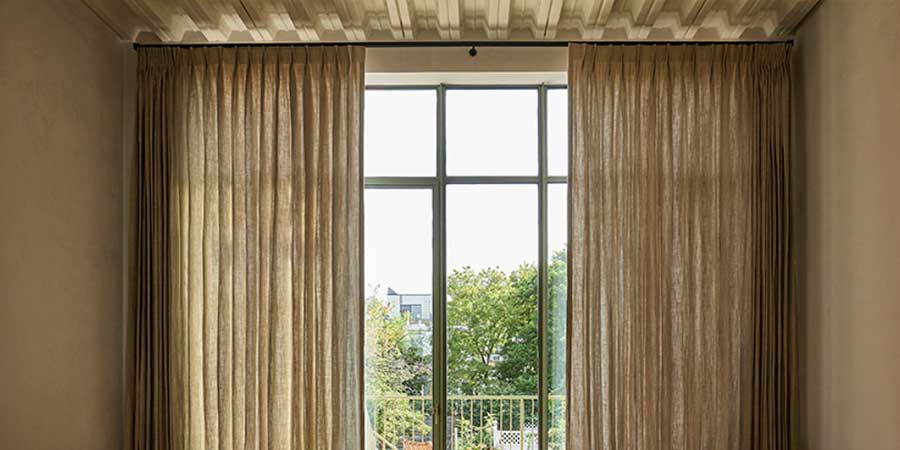
The windows of your home offer a beautiful style element. Custom drapery frames the window with color, texture, and pattern—adding height to the ceiling and coordinating the entire design. One of the most popular types, pinch pleat drapery, adds gorgeous detail for tailored elegance at the window. At California Window Fashions, our designers are here to explain how to choose the ideal pleats for your windows.
Pinch Pleat Drapery: What Is It?
Pinch pleat drapery is a header style, referring to the way the drapery is finished across the top. In this specific category, the name comes from the technique of creating the pleats. Fabric is gathered, or pinched, together, then sewn to create a distinct look. Pleats are put in place to offer intentional “movement” in the fabric, allowing drapes to stack evenly with neat spacing. There are a number of types of pinch pleat draperies—making this construction a favorite for interior design. Our window covering specialists help you customize your pinch pleat drapery, using that same versatility to create the perfect look for your personal space.
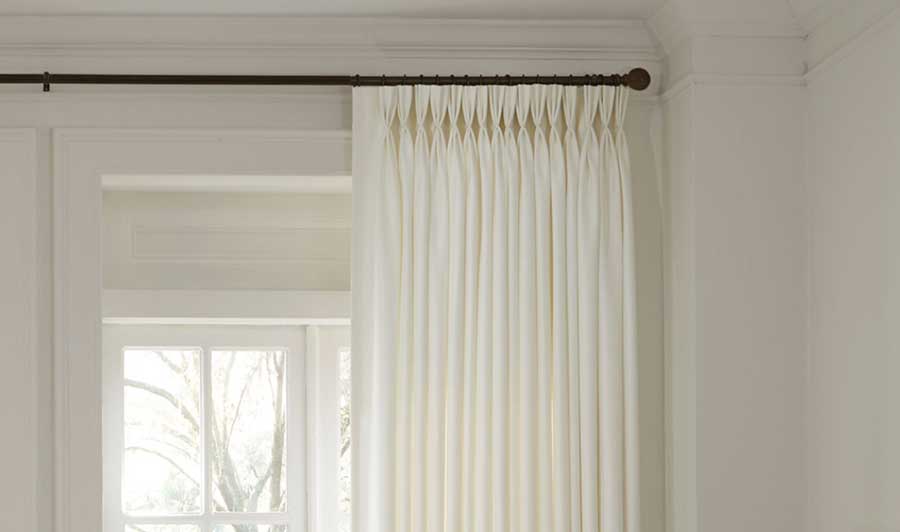
Pinch Pleats Create Unique Design
We will be exploring various details of pinch pleat curtains, explained and illustrated to help you understand both commonalities and differences. The wide selection of pleat styles make this header quite popular—there’s something for everyone and every room. The techniques and materials used create trained fabrics and structured folds, each one designed to express a specific style and tone, from casual to formal, and from traditional to modern. These custom draperies can be crafted with all weights of fabric, allowing you to create a personal statement at the window.
Pleated Headers: See the Details
Choosing a pleated style for the top of your custom draperies can be a significant decision, and our window covering specialists will walk you through the process so you make the right choice. It’s important to see the close-ups of your options so you can identify how one construction varies from the next, offering details that will coordinate with your own home’s design.
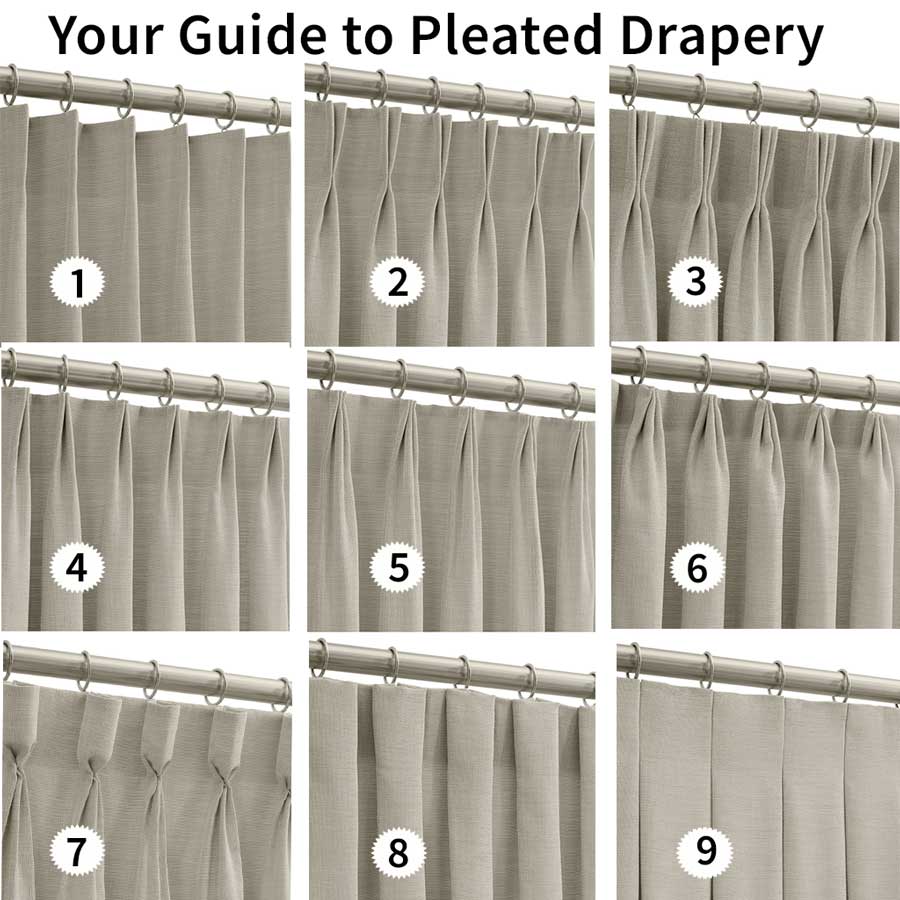
Standard Pleat Styles
The standard pleat is one of the most common ways to finish the top of draperies, chosen to represent the style and tone of the home. There is space between pleats that allows the material to open and close across the window. Many other pleat options in the industry are a version of this standard formation.
1. Single Pleat: Created with a single fold of fabric, reinforced materials are designed to stay in place, ensuring the neat form extends down the drapery for a trained appearance. This is the least formal of the three standard looks.
2. Double Pleat: Commonly referred to as a “Two Finger Pleat,” this uses two structured folds of fabric, pinched at three to four inches down from the top and sewn, creating a double pleat above and below the tack point. This pleat style can be used in both casual and formal settings, depending on textile selection and hardware.
3. Triple Pleat: Known as a “Three Finger Pleat,” this pleat style is created with three tailored folds, pinched at three to four inches down from the top. Fabric is tacked to create the triple pleat above and below the tack point. This is the most formal of the three standard options.
Euro Pleat Styles
Gaining popularity, the Euro Pleat offers a tailored look that allows the drapery to flow down the window a bit more freely, inviting a casual distinction that fits well in contemporary design. This inverted style is generally sewn at the very top, or one half inch down. From there, the drapery features a casual flow of folds down the window. There is spacing between the pinched portions of material, allowing the drapery to adjust open and closed.
4. Inverted Double Pleat: Created with two structured folds of fabric, gathered and tacked near the top of the drapery. This style is considered less formal than the inverted triple pleat.
5. Inverted Triple Pleat: Material is gathered in three defined folds, pinched and sewn near the top of the drapery. This style is considered more formal than the inverted double pleat.
6. Inverted Natural Pleat: The most casual of the Euro Pleat styles, the natural pleat is typically created with unstructured textiles, gathered and tacked at the very top of the drape, with folds freely flowing down the window. This style might require more maintenance than others, as it lacks the structured material that normally creates neat folds and stacks.
Other Pleat Styles
Gathering fabrics to create unique shapes opens a whole world of possibilities. Other pinch pleat headers are crafted for detailed design, and we are highlighting three options for you to explore, all capable of offering a one-of-a-kind statement.
7. Goblet Pleat: Designed to be a formal header style, tailored fabrics create a cylinder, sewn along the back, with the bottom of the cylinder closed off after the fabrics are pinched together and sewn. This is also referred to as a “Cup Style Pleat,” both names identifying the finished look.
8. Relaxed Box Pleat: Similar to the Goblet Pleat, but less formal, the cylinder is crafted and sewn at the back, creating an open shape that continues softly down the curtain. The relaxed folds might lead to slight maintenance, different from other pleat styles that offer more definition when adjusted.
9. Tuxedo Pleat: Structured fabrics are folded into position and sewn, with no spacing between the folds, creating an elegant, tailored design. This technique is typically designed to be used for stationery panels, as there is no additional fabric between the folds.
Pinch Pleat vs. Other Curtain Styles
If you’ve explored the idea of bringing custom draperies into your home, you already know there are other header styles that you could choose. We are showcasing the other two more popular looks: Ripple Fold Drapery and Grommet Curtains.
Ripple Fold Drapery
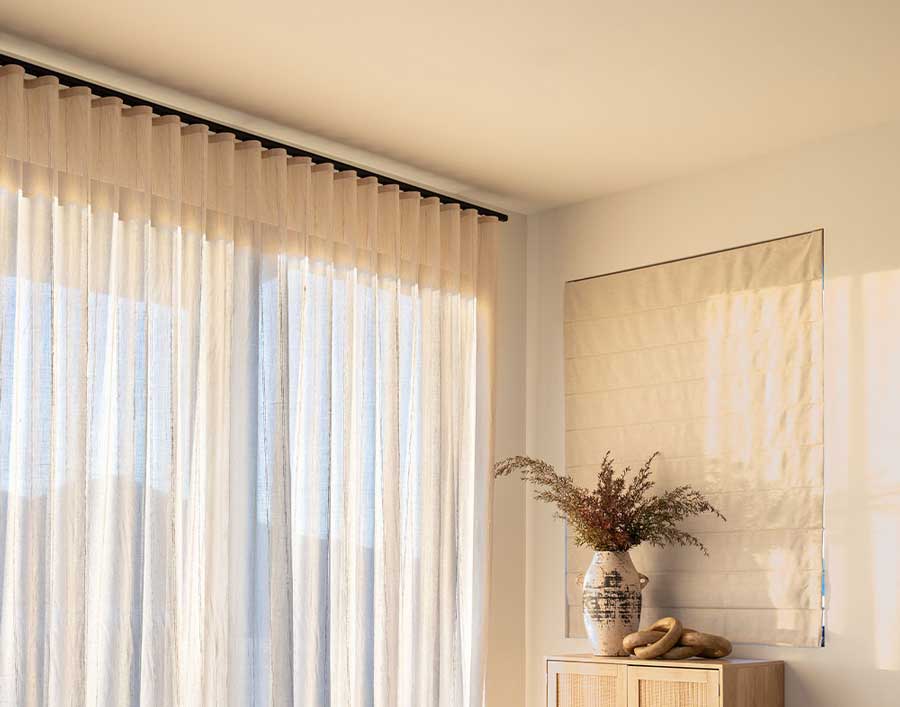
The ripple fold style of drapery involves soft, consistent curves of fabric that are attached to a specialty track. They open, close, and adjust with smooth, uniform movement, requiring little-to-no readjustment of the fabric due to the specialty drapery track. The track itself can stand out in bold contrast as an added design element, or it can blend into the entire look. This is an effortless statement, capable of styling a range of spaces, from casual to formal. Ripple fold drapery is a favorite—often used in minimalist design and modern homes where the simplicity lends itself to both style statements.
Grommet Drapery
Grommet curtains are widely known and loved for the ease of adjustment and wide selection of fabrics available. They are named for the grommets, or metal rings, stamped and attached into the fabric across the top of the drapery, forming circle-shaped cut-outs. These metal grommets then slide over the drapery rod, allowing the fabric to move without friction. Grommets can be customized to match the metal of the drapery hardware, complementing the overall look of the space. Adjustments need to be made to the material as they are opened and closed, due to the free flowing nature of the fabric. The resulting style statement of grommet drapery depends heavily on the textile weight and design elements, including color, texture, and pattern.

Are Pinch Pleat Curtains Traditional or Modern?
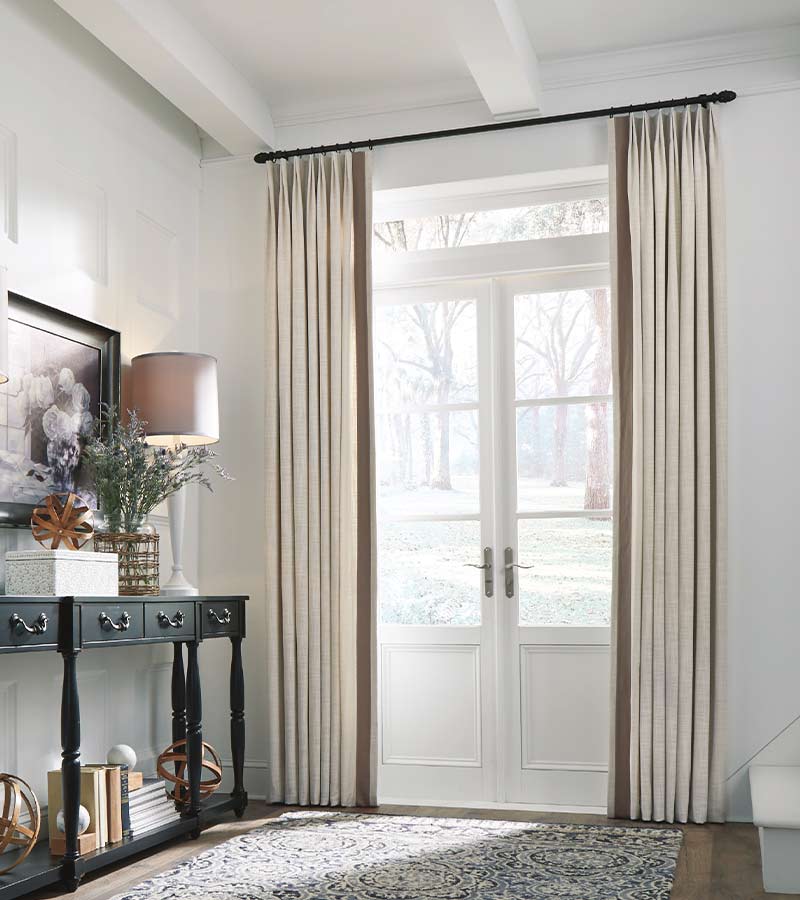
Pinch pleat curtains—in single, double and triple folds—lean towards traditional styling, but can easily be crafted to fit contemporary spaces. Once you decide the look you like—the details and finishing techniques—you can move to the fabric selection, which heavily influences the overall statement. Fabrics also determine the tone of the room, from casual to formal, no matter which curtain style you select. Cottons and linens coordinate well in casual spaces, where luxurious silk, velvet and jacquard often appeal to more formal areas of the home.
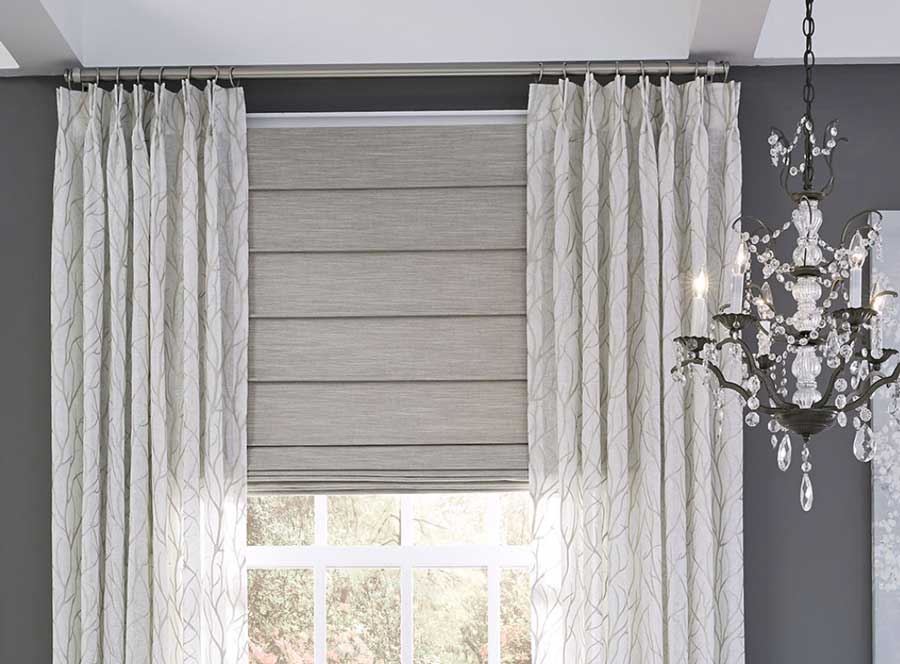
Can Pleated Drapes Be Layered with Other Window Treatments?
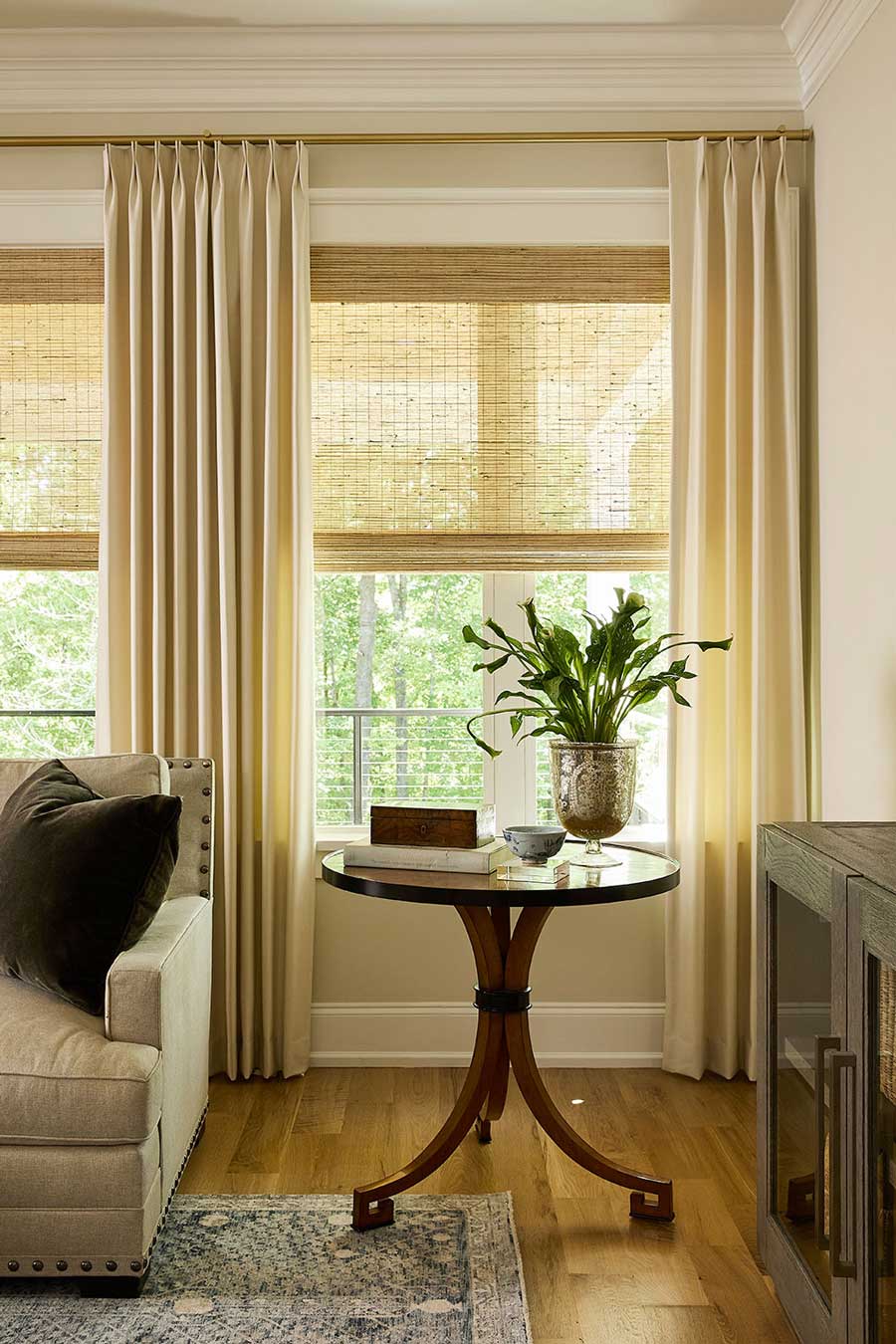
Yes, layering pleated drapery with shades, blinds and shutters is a beautiful way to style your windows, while improving the function of the space. Pinch pleat curtains frame the window, with the other window treatments in place to provide light control, privacy and energy efficiency. Some draperies are used as an additional layer of control, opening and closing as needed, yet other curtains are designed to remain at the sides of the window as stationery panels.
Is Motorization Available with Pinch Pleat Drapery?
Yes, the Hunter Douglas PowerView® automation system is available for pinch pleat curtains. Smart drapes open, close and adjust to meet the needs of the space, from lighting and comfort to energy savings and interior protection. With motorized drapery, you can use a remote or the app on your smartphone to make adjustments, set schedules and save favorites. If you choose to integrate with your smart home system, you’ll enjoy voice commands and synced adjustments to fit your household needs.
See Pleated Drapery Styles in Person!
Our window treatment showroom is located in Roseville, and we invite you to stop by and see examples of custom draperies for yourself. Operate full-size displays, browse through fabrics and chat with one of our designers. We’ll help you decide which header styles will be best for your home. When you’re ready, schedule a free in-home design consultation, where you can browse fabrics in your own home while your window covering specialist takes professional measurements of your windows. Our team at California Window Fashions is looking forward to working with you!