

When you layer window treatments, you fill your home with coordinated style and incredible benefits. Do you love this look? We’ve collected tips to help you achieve the perfect design at the window—balancing beauty, function, and personalization.
Layering shades with drapery is all about combining fashion and performance. Just like accessories complete an outfit, layered window treatments complete the room.
Step One: Choose a Base Shade
To layer window treatments, start with the first level of covering. We’ll call this the base shade. While it will coordinate with the draperies, the base layer is intended for vital function and lifestyle improvements.
The specific benefits may vary depending on whether you choose window shades, blinds, or plantation shutters. However, these are some of the ways a base shade can benefit your family:
- Direct incoming light
- Maintain interior temperatures
- Protect privacy
- Block unwanted light
- Reduce glare
- Protect interiors from UV rays
- Offer room darkening when needed
- Open for view-through
Cellular shades, roller shades, woven woods, roman shades, and sheer shades all offer unique advantages. The key is choosing the option that fits your home’s needs first—then building the design around it.
Step Two: Select Fabrics for Style & Personality
What do fabrics do at the window? They add movement, texture, dimension, and personality. The fabrics of your custom drapery panels will set the tone of the entire room.
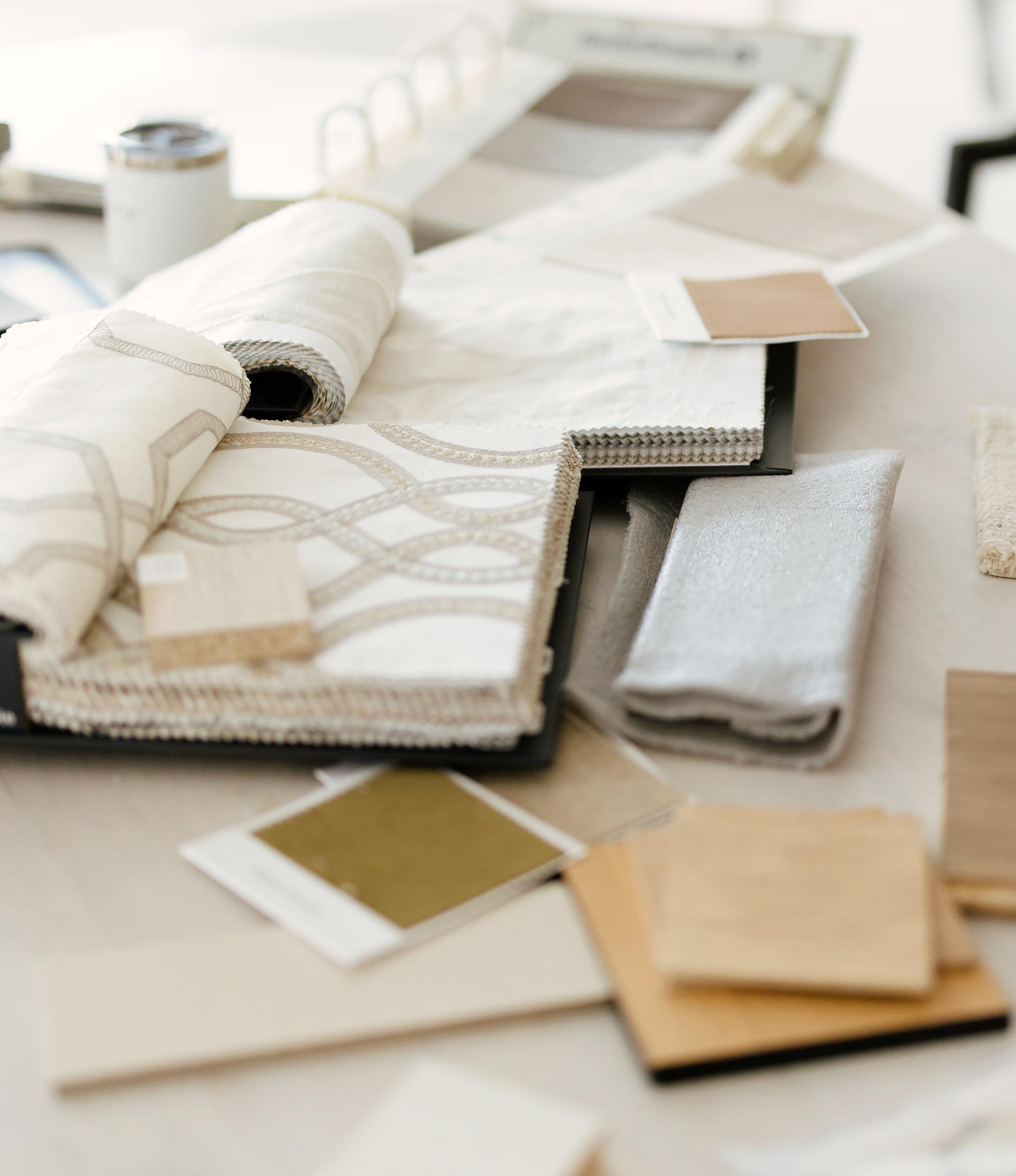
When selecting fabrics, consider:
- Room Style: Casual or well-dressed?
- Pattern vs. Solid: Statement or subtle?
- Color: Neutral and airy or bold and dramatic?
- Function: Decorative side panels or full draperies that close?
Layered fabrics are trending for good reason. Neutrals create height and openness, while patterned textiles bring character and charm. For a refined look, jacquard fabrics add texture. Silks and velvet elevate formal spaces, while cotton and linen soften casual rooms.
Step Three: Balance Patterns & Textures
Patterns and textures bring that special something to your design. Just like in fashion, contrast can elevate the entire look.
A few favorite combinations include:
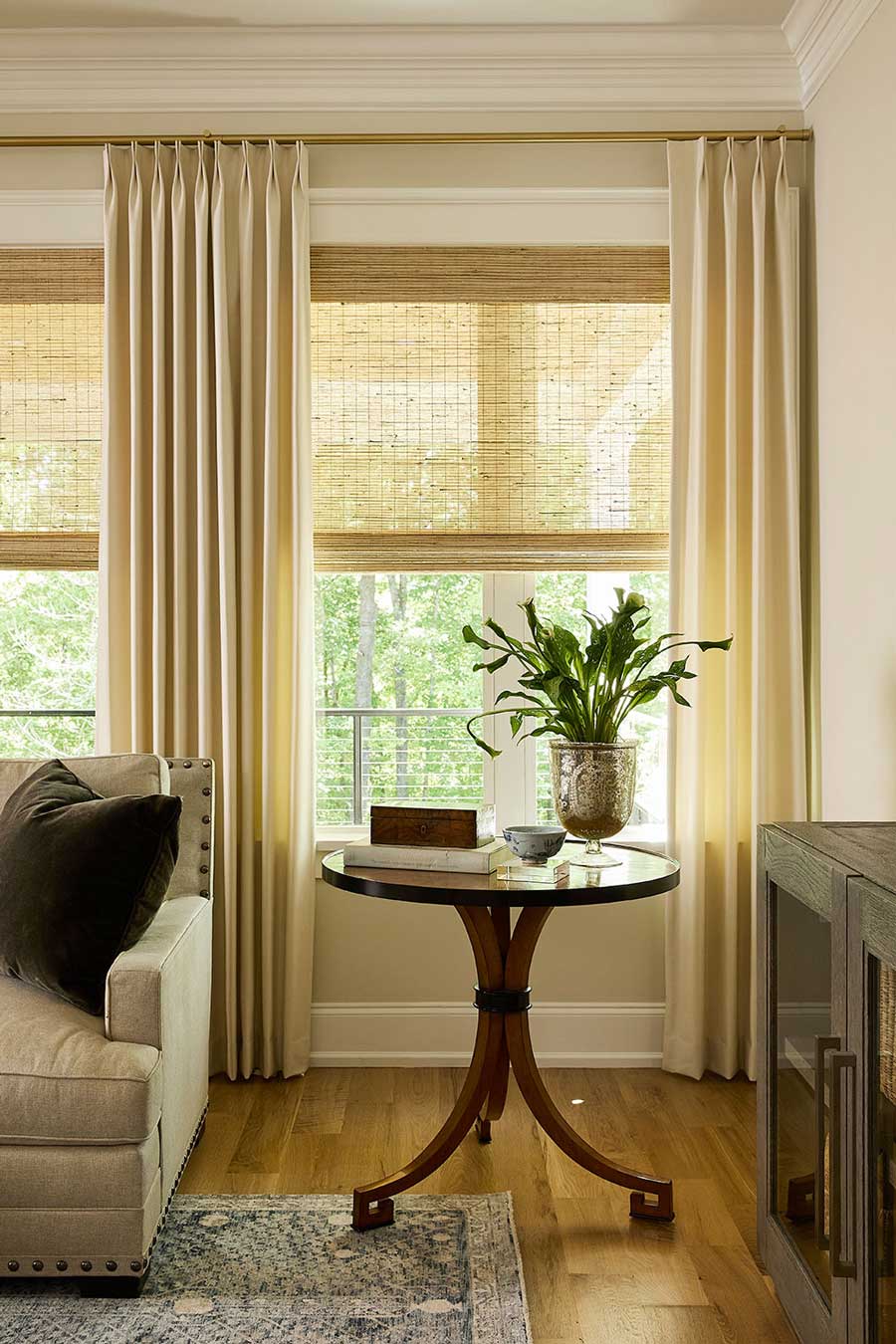
- Woven wood shades + patterned drapery for warmth and texture
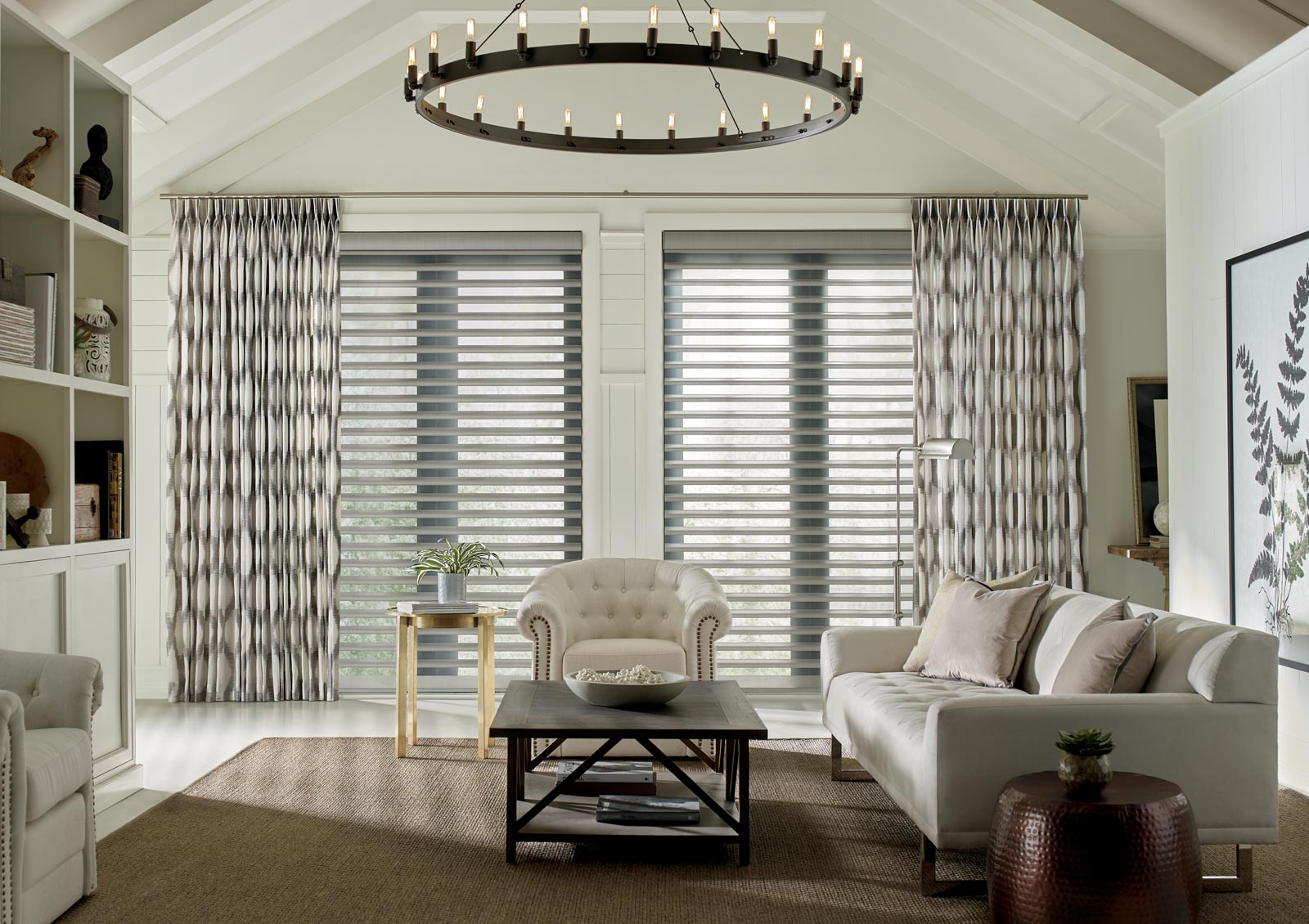
- Sheer shades + neutral panels for light and openness
- Bold drapes + low-profile roller shades for dramatic contrast
When layering, remember: too many competing patterns can create visual confusion. A common design approach is pairing one patterned fabric with one solid. This keeps the look intentional and refined.

Step Four: Determine the Finishing Details
Once you’ve chosen your base shade and fabrics, the finishing details complete the design.
Hardware
Drapery hardware is like jewelry for your windows. Matte black and oil-rubbed bronze are popular finishes, but the right choice depends on your overall style. Installing rods higher above the window adds visual height and makes ceilings appear taller.
Length
Two of the most popular drapery lengths include:
- Floor Length: Drapery reaches the floor without touching.
- Puddling: Fabric rests softly on the floor, creating a romantic break.
Header Style
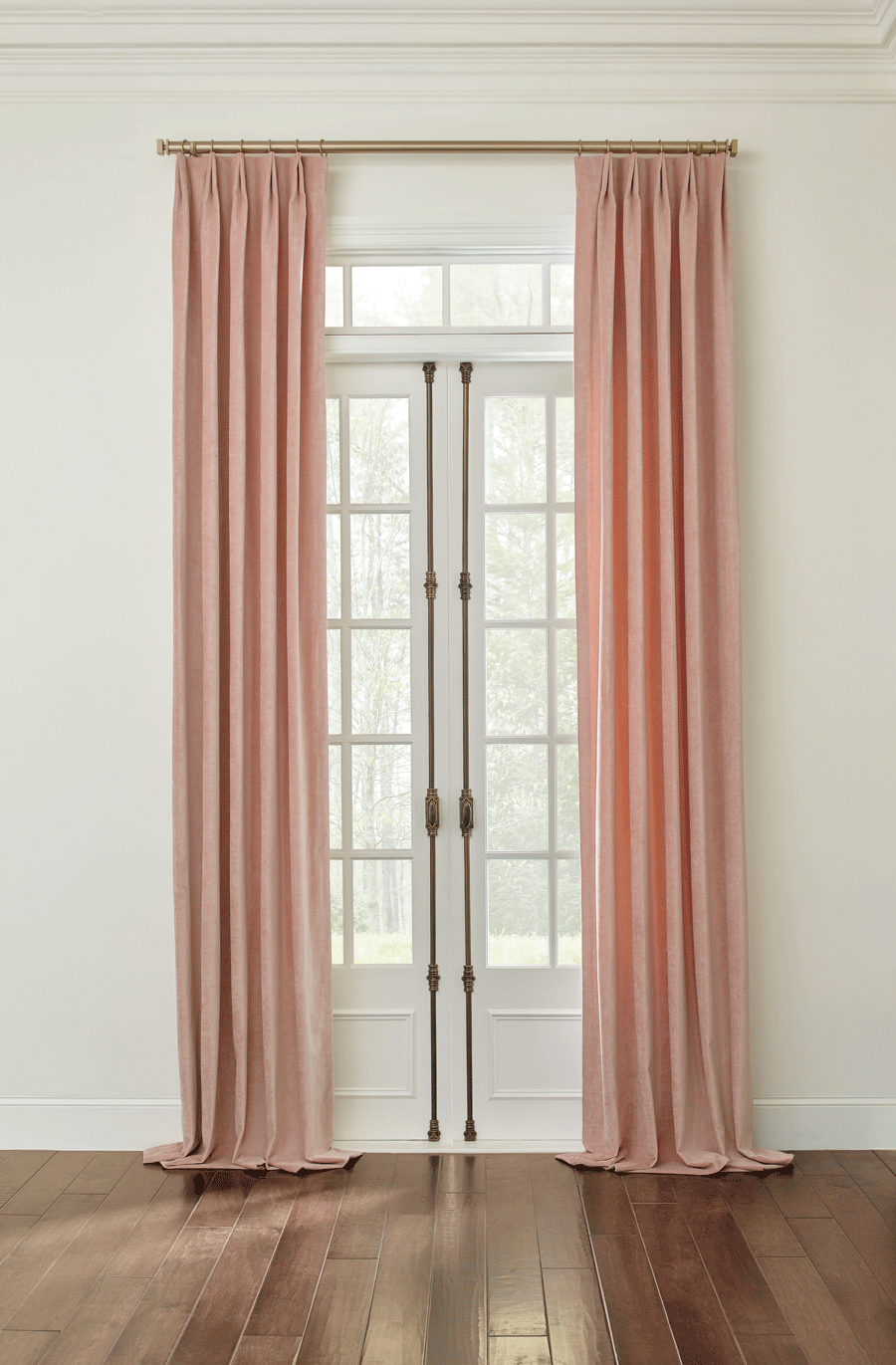
The header style defines how drapery panels hang from the rod. Options for headers and pleated drapery styles include:
- Rod Pocket for a casual look
- Grommet Panels for contemporary appeal
- Pinch Pleat for classic elegance
- Ripple Fold for modern, streamlined design
These details personalize your custom drapery and enhance the overall aesthetic.
Functionality: It’s More Than Just Style
Layered window treatments aren’t only about appearance—they offer exceptional functionality.
The Base Shade
The base shade is chosen primarily for function, then style, capable of providing:
- Light control
- Privacy
- Energy efficiency
- UV protection
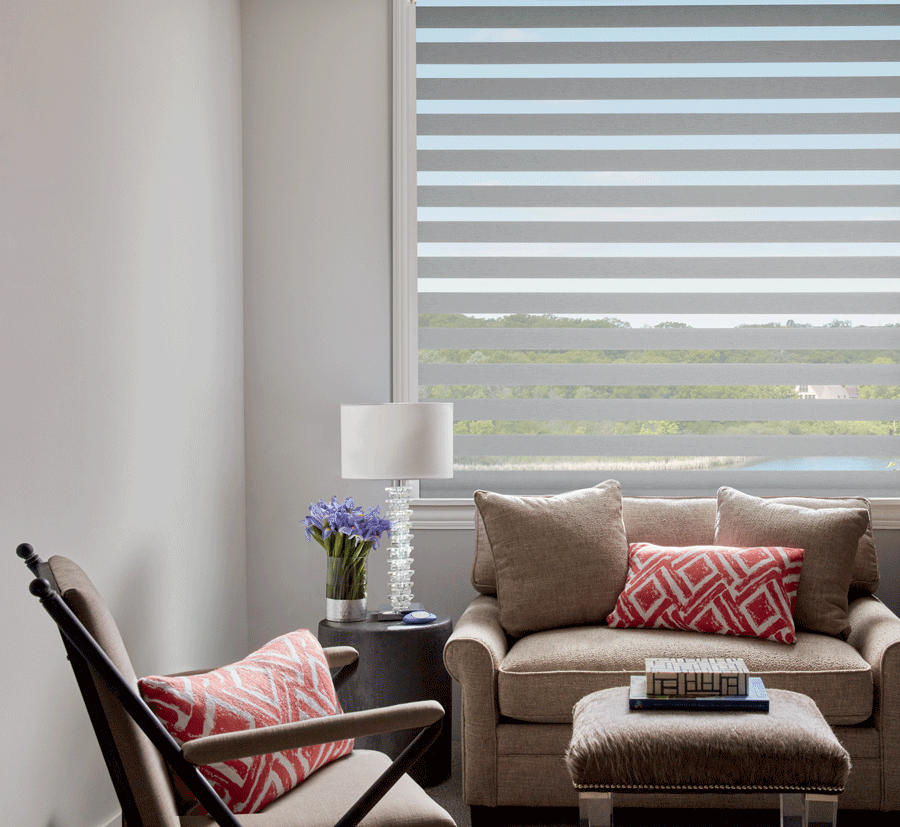
For base shades, roller shades and roman shades are very popular choices. Other base shade selections include cellular shades, sheer shades and woven shades.
The Drapery
The drapery layer can be chosen for style first, function second. This layer can:
- Frame the window
- Add insulation
- Provide room darkening
- Enhance acoustics
- Add softness and dimension
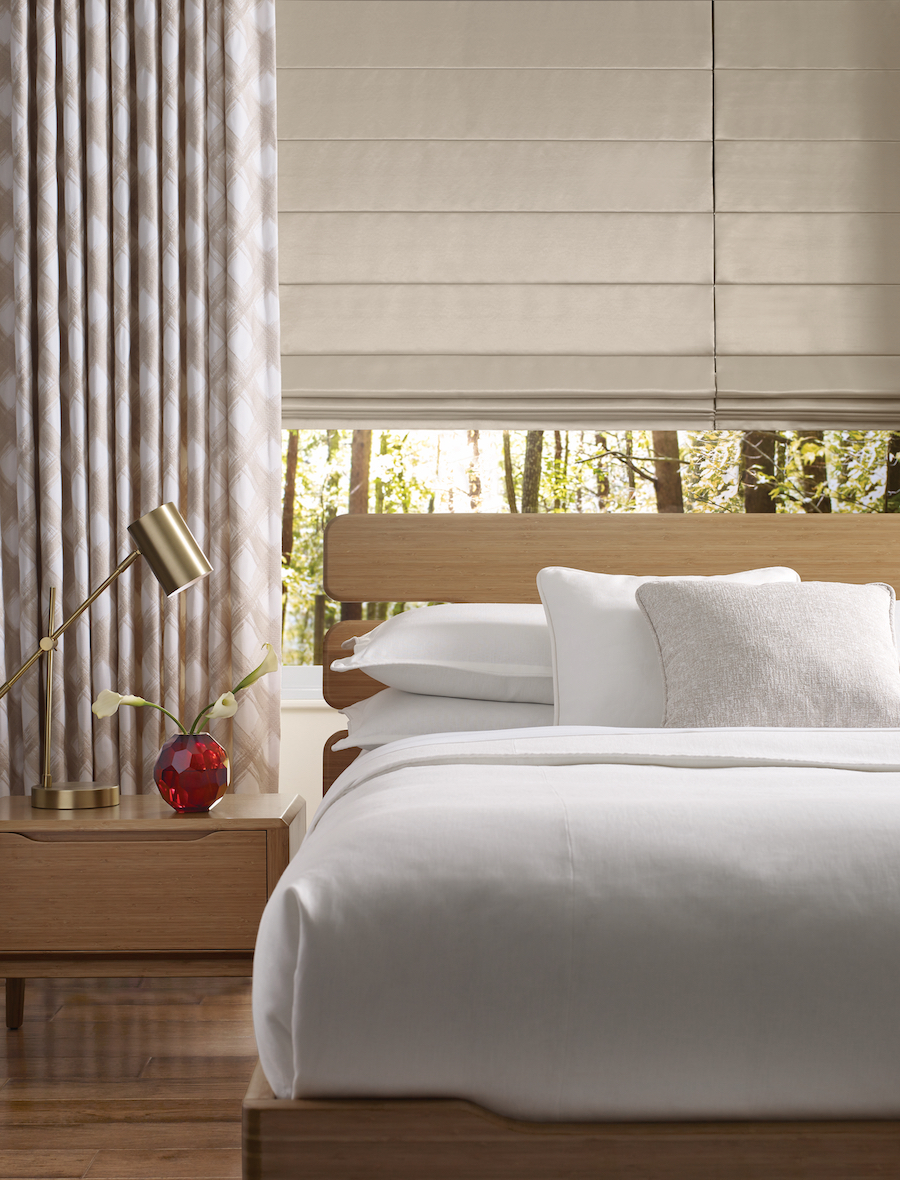
In bedrooms and master suites, layering room-darkening shades with drapery offers both daytime elegance and nighttime comfort.
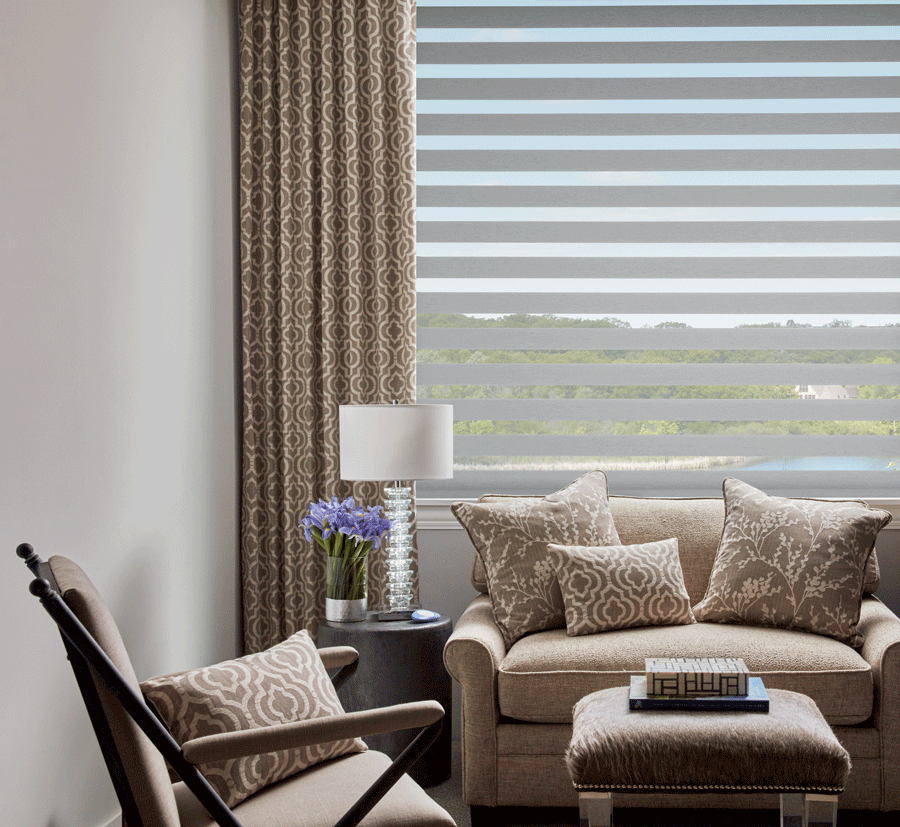
Smart Features for Modern Living
Today’s layered window treatments can include automation. Smart shades adjust with voice commands or a touch of a button—and draperies can be motorized, too.
With PowerView® Automation, you can:
- Schedule shades to open and close
- Adjust light levels throughout the day
- Improve energy efficiency
- Increase convenience
Layering now combines classic design with modern technology.
Solving Tricky Windows
Not every window is straightforward. Depth, trim, and mounting space all matter.
If windows are shallow, shades may need to be outside mounted. Inside-mounted shades create a clean, kerfed (trim-less) look when depth allows. Pairing low-profile roller shades with drapery can solve many design challenges—especially when working with french doors or specialty windows.
With the right product knowledge, almost any window can be layered beautifully.
Popular Layered Combinations
Some of our favorite layered looks include:
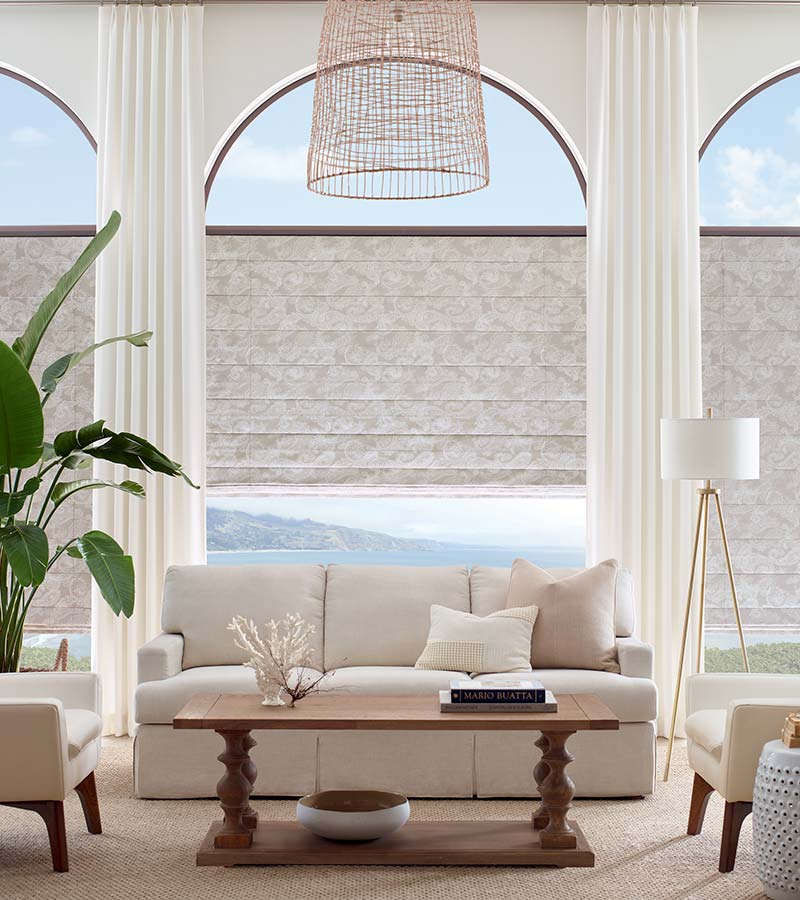
- Roman shades with side panels
- Woven woods with custom drapery
- Sheer shades layered with neutral panels
- Roller shades paired with bold statement drapes
Whether your style is farmhouse chic, modern contrast, vintage charm, or neutral elegance, layering window treatments brings dimension and refinement.
Ready to Layer Window Treatments?
When you layer window treatments, you create a space that feels finished, personalized, and functional. From selecting base shades to choosing fabrics, hardware, and smart features, each decision builds toward a cohesive design.
At California Window Fashions, our team will guide you through every step. We’ll show you inspirational photos, fabric samples, and product options so you can confidently design a look that fits your home and lifestyle.
Explore our full collection of custom drapery designs to discover your favorites. Contact us today to schedule your FREE in-home design consultation and start layering with confidence.
