

When homeowners start shopping for room darkening window treatments, one question comes up again and again: What actually makes a shade room darkening?
The answer goes beyond the product itself. Fabrics, materials, installation methods, operating systems, and specialized features all play a role in how much light is blocked. Understanding these room darkening details can help you choose the right solution for bedrooms, media rooms, home offices, and other spaces where light control matters.
For a complete overview of available options, visit our Room Darkening Solutions page.
Not All Room Darkening Window Treatments Work the Same Way
Many homeowners assume room darkening is simply a fabric choice. While fabric opacity certainly matters, achieving a darker environment often depends on several factors working together.
The most effective room darkening window treatments combine:
- Opaque or room darkening fabrics
- Proper window coverage
- Minimal light gaps
- Optional liners or secondary shades
- Specialized blackout features when needed
Room Darkening Starts with Fabrics & Materials
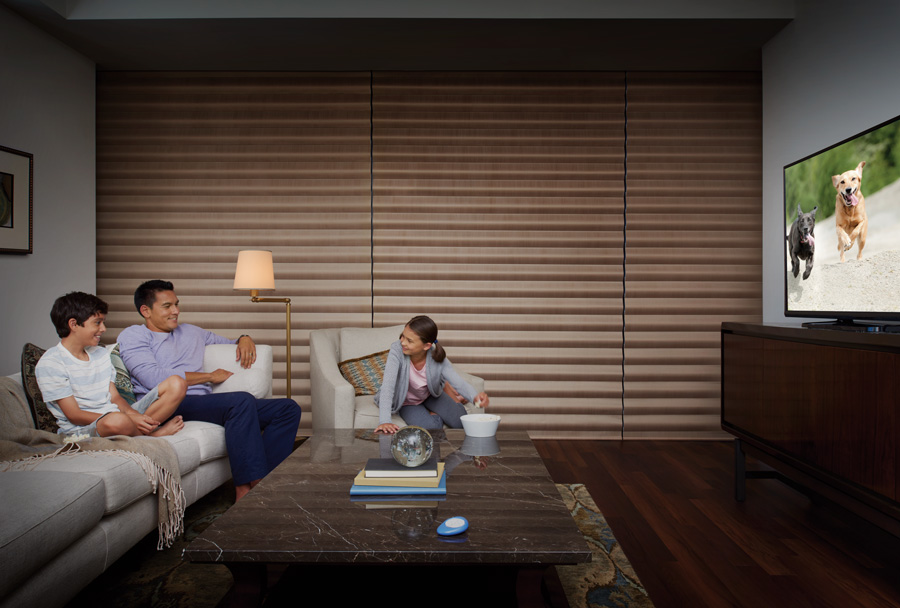
The first step toward a darker room is selecting the right fabric or material.
Light filtering fabrics allow sunlight to pass through while softening glare. Room darkening fabrics block significantly more light, creating a darker and more comfortable environment. Some products can also be paired with liners that increase privacy and improve light control.
The amount of darkness you need should help guide your selection. A bedroom may require much greater light control than a living room, home office, or dining area.
Can Shutters Be Room Darkening?
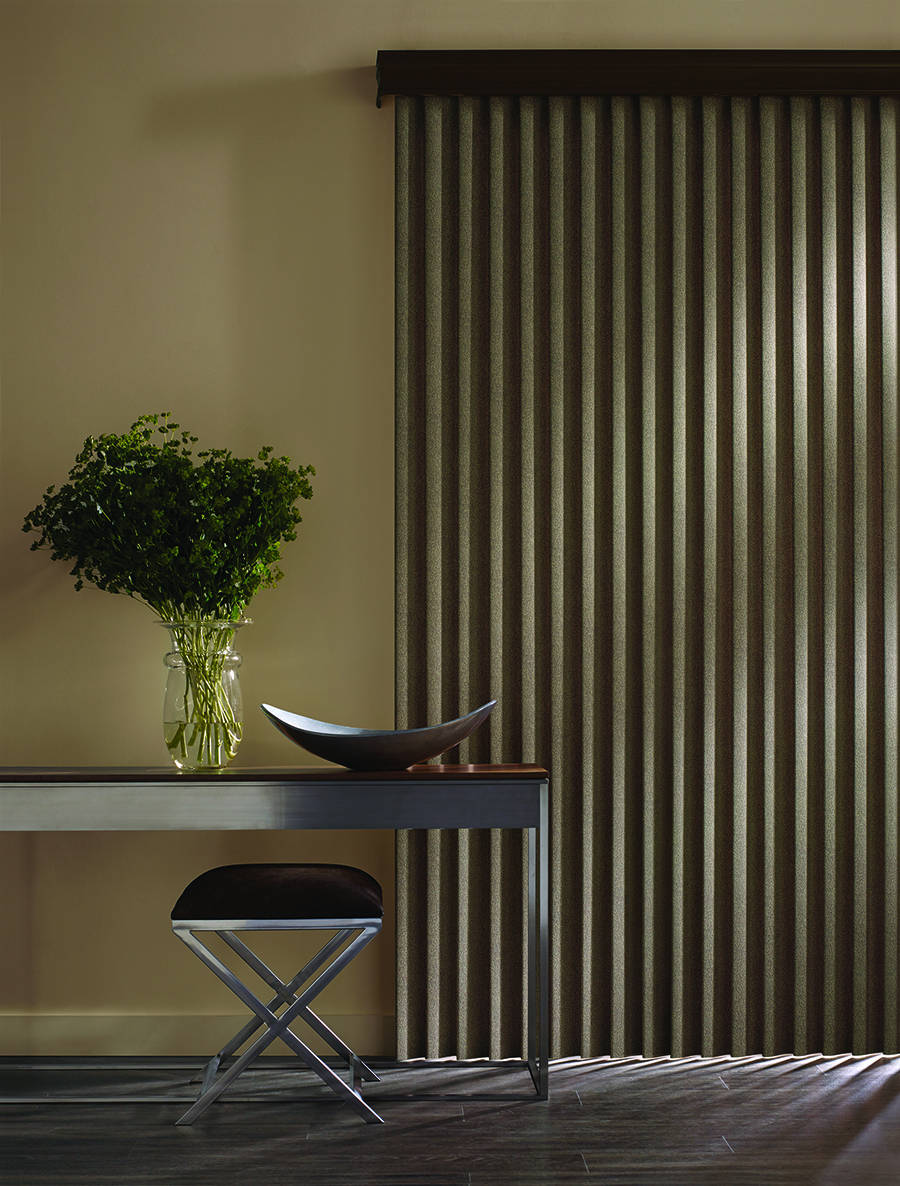
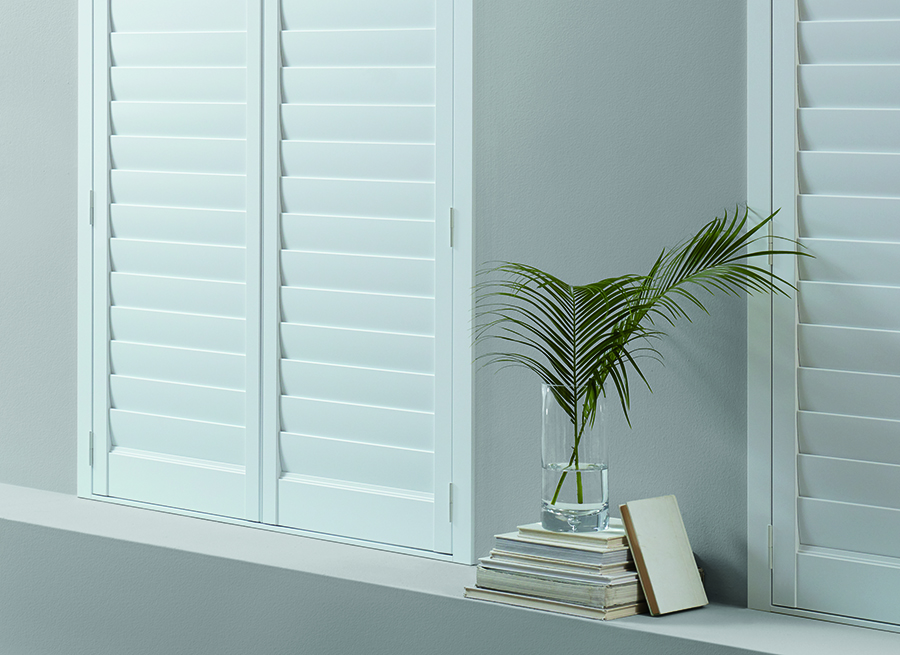
Yes. Plantation shutters provide excellent light control thanks to their solid construction and adjustable louvers.
When the louvers are closed, shutters significantly reduce incoming light while adding privacy and insulation. However, because the louvers must move, small amounts of light can still enter between the panels and louvers.
For many homeowners, shutters provide more than enough darkness. For others seeking near-total darkness, shades with specialized blackout features may be a better fit.
Understanding Light Gaps
One of the most important room darkening details is something many homeowners don’t discover until after installation: light gaps.
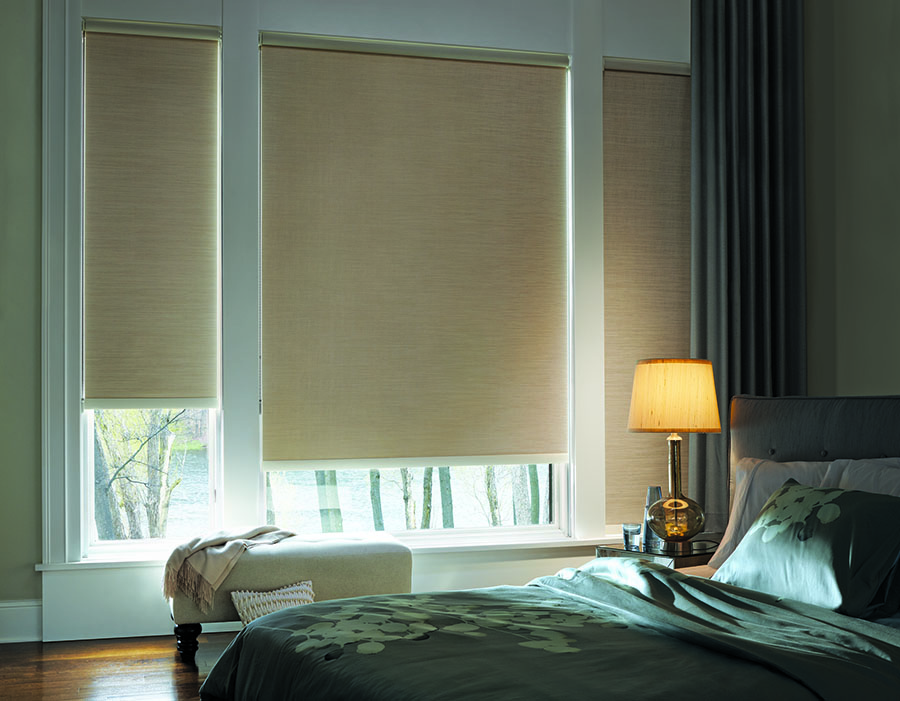
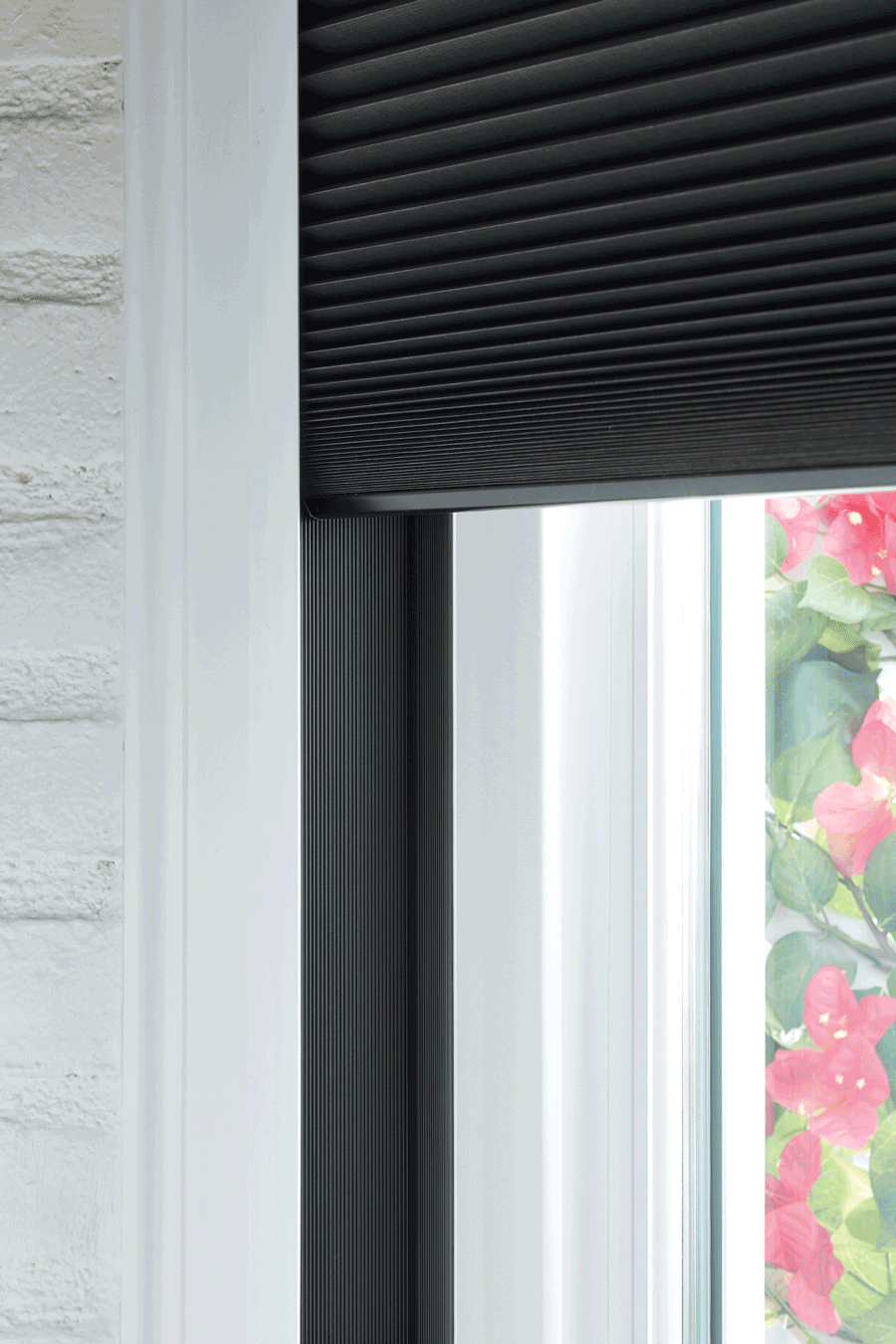
Light gaps are the small areas where sunlight can enter between the edge of the shade and the window frame. Even when using room darkening fabrics, these narrow openings may allow a subtle glow around the perimeter of the window.
In many rooms, light gaps aren’t a concern. In bedrooms and media rooms, however, they can make a noticeable difference.
How Blackout Features Eliminate Light Gaps
For homeowners seeking the highest level of darkness, blackout systems are specifically designed to address light gaps.
One of the most innovative examples is LightLock™, available with Duette® Honeycomb Shades. Side channels guide the shade within the window frame, helping prevent light from entering around the edges.
This feature creates one of the most effective blackout environments available, making it ideal for bedrooms, nurseries, and media rooms.
Dual Shades: Flexible Light Control
Sometimes homeowners want both natural light and darkness from the same window treatment. That’s where dual shades become valuable.
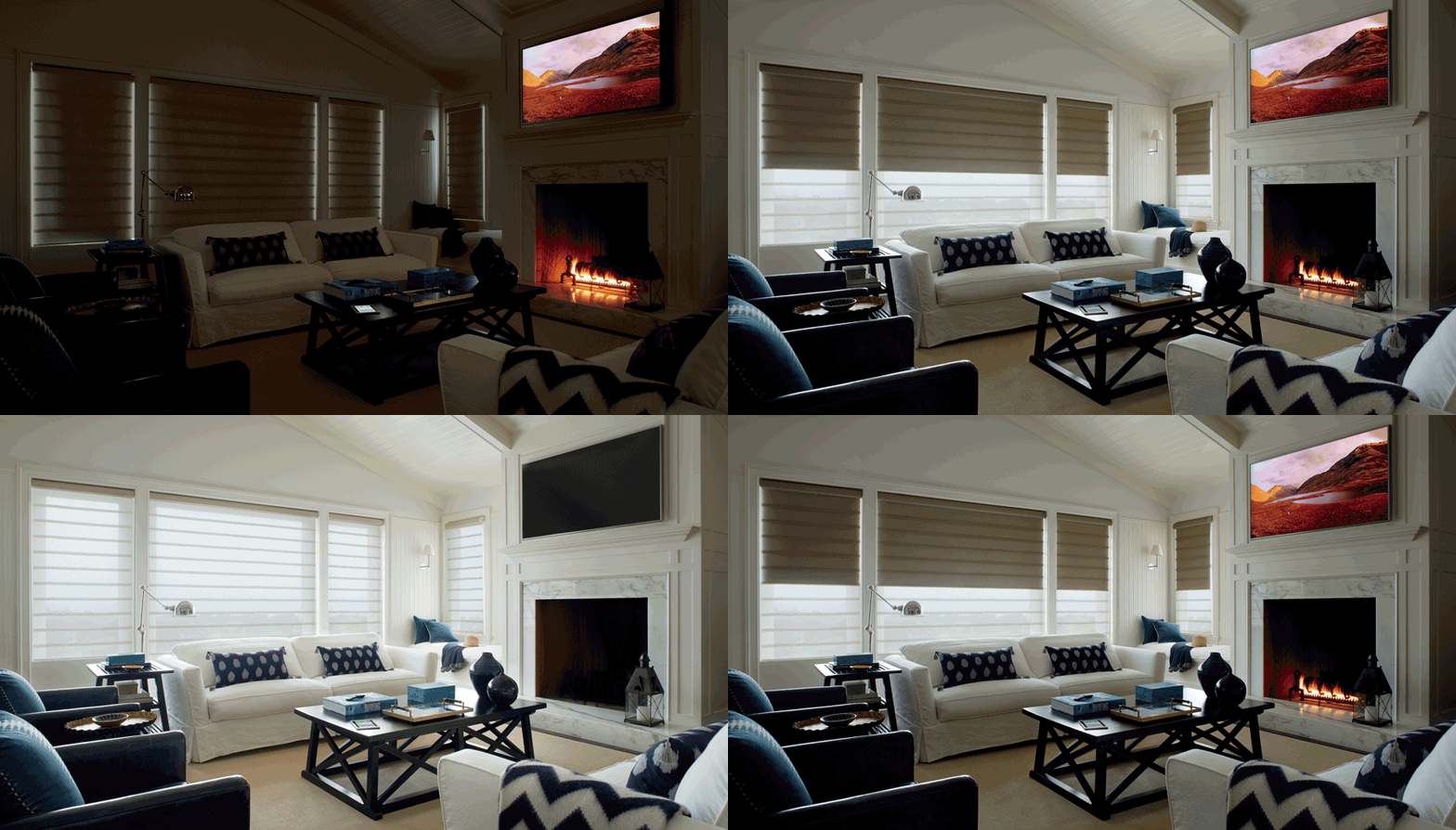
Dual shade systems combine a light-filtering front shade with a secondary room darkening or blackout shade. During the day, enjoy soft daylight and privacy. When additional darkness is needed, simply lower the secondary shade.
This flexibility makes dual shades especially popular in bedrooms, home offices, and living spaces where lighting needs change throughout the day.
Learn more about dual shades and how they create customizable light control.
Which Room Darkening Features Are Right for Your Home?
The best room darkening solution depends on how you use the space. Bedrooms, media rooms, nurseries, and home offices all have different lighting needs. If you’re still deciding between room darkening and blackout options, our guide on Room Darkening vs Blackout Shades can help clarify the differences.
For personalized recommendations, contact our team for a free in-home consultation. We’ll help you find the right combination of fabrics, features, and operating systems to create the perfect atmosphere for your home.
